



Four in five affluent and high net worth respondents across nine markets say they consciously buy certain luxury items with the intention of passing them on one day. The same buyers are more likely than other respondents to have sold a luxury item through resale in the past year, so the next owner of an heirloom is harder to predict than the word suggests.
Buying certain pieces to pass on one day is the majority position among affluent and high net worth consumers.
In AFFLUENTIAL TrendLens 2026, 81% of affluent and high net worth respondents across nine markets agree that they consciously buy certain luxury items with the intention of passing them on one day. A slightly larger share, 83%, agree that an item’s heirloom potential influences their decision to buy it.
That intention names no recipient and no date.
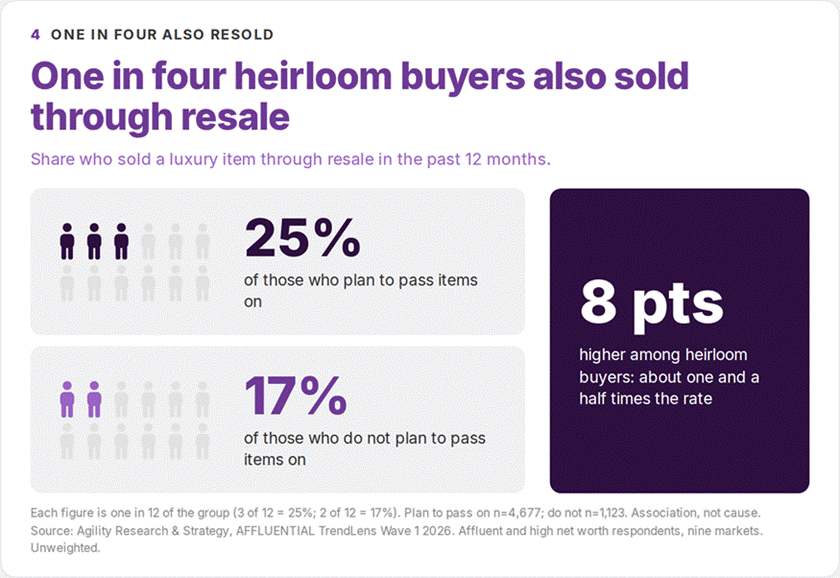
Among respondents who buy items to pass on, called heirloom buyers here, 25% sold a luxury item through resale in the past 12 months, compared with 17% of respondents who do not buy with that intention. That is 8 percentage points higher, roughly one and a half times the rate. Keeping some pieces for later and selling others are habits that coexist in the same group of buyers.
Heirloom buyers appear at every wealth level and in every category
Among high-net-worth respondents, defined as individuals with financial assets of US$1 million or more, 81% are heirloom buyers.
Among affluent respondents, defined as individuals with financial assets below US$1 million, 80% are heirloom buyers, a gap of 1 point. The habit is shared across the wealth range rather than concentrated at the top.
The spread is wider when respondents are grouped by their main luxury category, and the floor stays high.
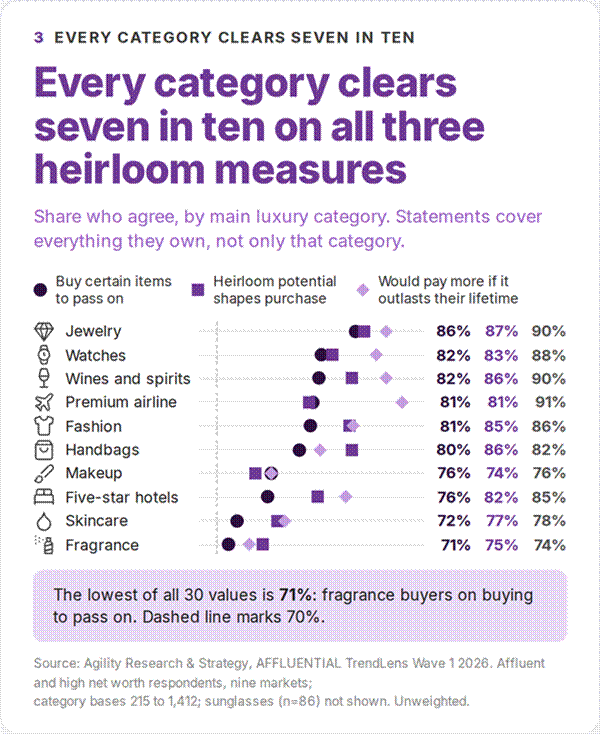
Among respondents whose focus over the past six months was jewelry, 86% agree that they buy items to pass on; among those focused on fragrance, 71% agree, a 15-point gap. The statement asked about all the luxury objects and assets a person owns, so the gap describes the buyers more than the products, and a fragrance buyer who agrees may have a watch in mind. Even so, seven in ten respondents focused on fragrance or skincare say they buy some things to pass on.
By market, agreement runs from 93% in Japan, with France at 91% and Thailand at 90%, down to 69% in Australia, indicating that more than two in three respondents in every market buy certain pieces with passing them on in mind.
Buyers will pay for longevity and split on what proves it
Paying more for longevity draws firmer conviction than the heirloom intention itself.
Among all respondents, 86% agree they would pay more for a luxury item they believe will outlast their lifetime in excellent condition, and 41% agree strongly, compared with 34% who strongly agree that they buy items to pass on: a 7-point gap.
What would make that premium believable is far less settled.
Asked to choose the single factor that would most convince them of a brand’s commitment to longevity and ethics, heirloom buyers spread their answers widely, and no option draws more than 17%. A digital product passport recording origin, materials, and ownership history ties for first at 17%, level with full public disclosure of every supplier. A guaranteed lifetime repair and restoration service is chosen by 13%.
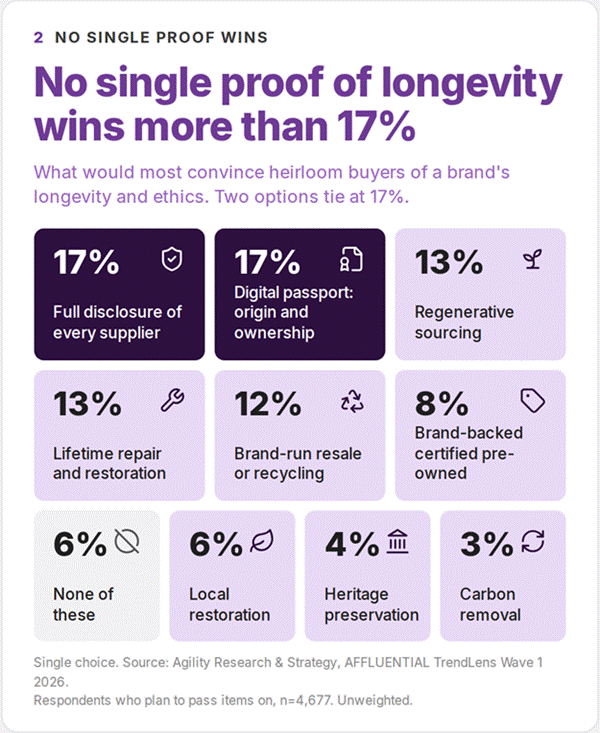
The digital passport is also the option that most separates heirloom buyers from respondents who do not buy to pass on: 17% against 11%, a 6-point gap.
A record of origin and ownership is a proof that travels with an object to its next owner, whether that owner is family or a stranger buying through resale.
For a product or after-sales lead, designing for a second owner turns into three tests for each new line: whether materials and construction let the house restore the piece decades after sale, whether the piece carries a record of origin and ownership that a later buyer can check, and whether the brand’s resale policy treats a second sale as part of the object’s life.
These findings record stated intention and preference, not what happens to a piece once it is sold, so the tests are standards to pilot, and none is a proven sales lever.
A luxury house that designs only for the first buyer is selling to a group in which four in five say they buy some pieces to pass on, and in which one in four of those buyers sold a luxury item through resale in the past 12 months.
Where the house offers no repair route and keeps no ownership record, its part in the piece’s life ends at the first sale, and every repair and resale after that, through however many owners, happens without the house.
Source note
Agility Research & Strategy, AFFLUENTIAL TrendLens, Wave 1 2026. Online survey of 5,800 affluent and high net worth respondents in nine markets: China (1,000), Japan (816), the United States (815), the United Kingdom (669), and Australia, France, India, Indonesia, and Thailand (500 each). High net worth respondents report financial assets, excluding their primary residence, of US$1 million or more (1,370); affluent respondents report less (4,430). No weighting was applied. Percentages are rounded to whole numbers from unrounded values.