

By Agility Research & Strategy · 1 September 2026
Australian respondents sit eleven points below the nine-market level on buying luxury with the intention of passing it on, and exactly level on paying more for something built to outlast them. The distance between those two findings is where the Australia proposition is being written wrong.
Late morning in Melbourne, and that fancy coat has been on the list for about three weeks. Rebecca is 39. She has looked at it twice online and once in the changing room she is standing in now, and she has a sales associate contact here and at one other brand, which is how most of her shopping is done. She asks how the seam is finished. She asks whether the store repairs it, and how long that takes. She takes the coat.
She does not ponder who it will belong to after her.
In Australia, only 69% of respondents agree they consciously buy certain luxury items with the intention of passing them on, against 81% across the nine markets we surveyed. It is the finding most likely to be read as a market that cares less about permanence.
It is not what the rest of the battery says. Three functions have a decision resting on which reading is right: the brand lead setting the Australia proposition, the clienteling lead writing what associates say in the room, and whoever signs off the aftercare investment.
The intention is missing but the durability preference is not
The same respondents were asked three further questions about the objects they own. 85% would pay more for a luxury item they believe will outlast them, against 86% across the nine markets. 83% say heirloom potential influences the decision, against the same 83%. 78% have already designated specific items to particular people, against 81%. On these bases, all three differences are noise.
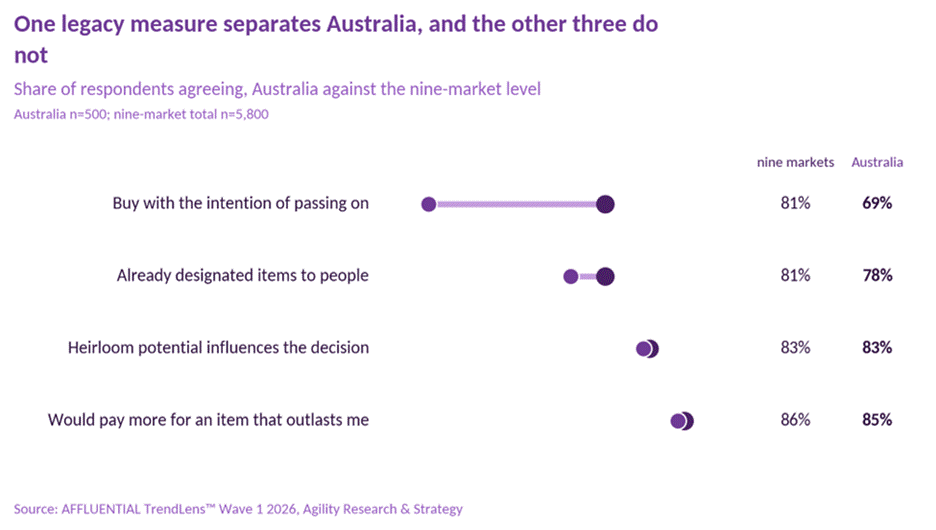
So the durability preference is intact and the inheritance frame around it is not. We would read this as a market that buys for the life of the object and not for its succession, which is a distinction about the story a brand tells, not about the product it sells.
That distinction has a price attached, and the price is already being paid by any brand whose Australia story leads on legacy. A campaign built on what a piece will mean to a daughter is arguing a case this market has not accepted. However, a campaign built on what the piece will still look like in fifteen years is arguing one it has, at a rate that matches every other market measured.
Australia is not the only market low on the intention question. China at 71% and the United Kingdom at 72% sit alongside it, and these bases cannot separate the three.
Belief in craftsmanship sits above the nine-market level
Belief in the product itself runs high. 89% of Australian respondents say they value brands that preserve traditional craftsmanship, against 86% across the nine markets, and that difference holds on these bases. Four markets sit higher, so this is not a lead. It is a market that is above the middle on the thing it says it is buying, while sitting at the bottom on two measures of how that buying gets prompted and framed.
Taken together, the three findings point the same way. The appetite is present but the route to it is narrower than the brand assumes.
Where the reluctance is real, and it is about brands
One finding does not fit that reading, and it is the one worth planning against. Asked about high quality brands positioned below traditional luxury, 16% of Australian respondents say they have actively shifted spending toward them, against 23% across the nine markets. Another 17% say they remain focused on traditional luxury regardless, against 13%.
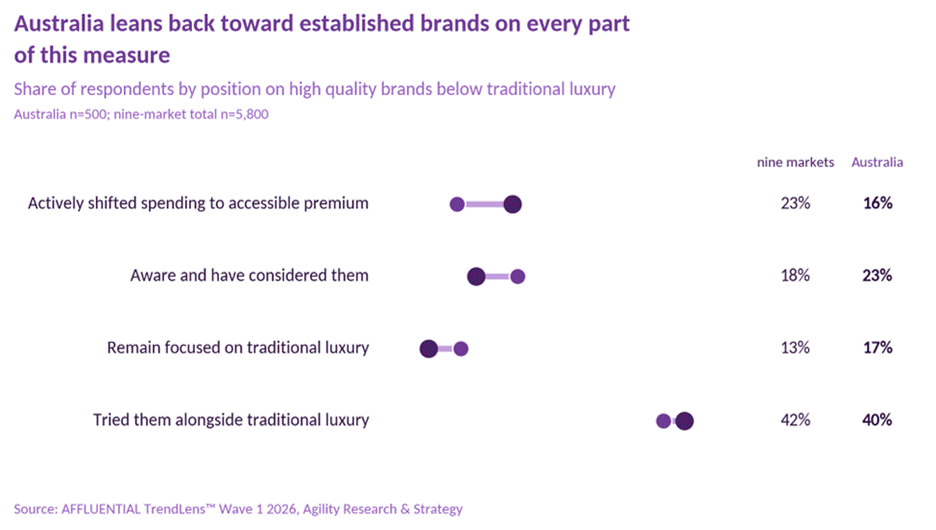
Here the low number does look like appetite. Australian respondents are more conservative about brand experimentation, not less exposed to it, and 63% prefer luxury without visible branding against 71% across the nine.
The reading that survives both sections is narrower than the one that opened this piece. Durability and technology are under-served in Australia rather than unwanted. The willingness to move outside the established brand set is genuinely lower, and a proposition that assumes otherwise is something nobody in this market asked for.
Talk about the durability claim and not the inheritance one
Brand leads in Australia have one edit to make this cycle and it costs nothing. The material claim, the repair promise, and the expected life of the object should carry the Australian proposition, and the succession story should come out of it, because 85% of this market is already paying for the first claim and 69% has not accepted the second.
Clienteling has the same edit at a smaller scale. An associate who can answer how a seam is finished and what the repair turnaround is has met this market where it stands. One who opens on what the piece will mean to the next generation is opening on the weakest claim available in Australia.
Aftercare is where the money follows. Your service proposition is the durability claim made operational, and it is the part of the argument this market has already agreed with.
Rebecca will have the coat repaired at some point in the next several years. Whether she has it repaired by the brand that sold it to her is the only part of this still open.
Source note: AFFLUENTIAL TrendLens™ Wave 1 2026, Agility Research & Strategy. Nine markets, total n=5,800. Australia n=500; China n=1,000; France n=500; India n=500; Indonesia n=500; Japan n=816; Thailand n=500; United Kingdom n=669; United States n=815.